Ever sprayed a perfume in the store, loved it, bought it, and then wondered why it smells completely different on your skin an hour later?
That happens because perfumes are made in layers called fragrance notes. These notes unfold over time and create the full scent experience of a perfume.
If terms like top notes, heart notes, and base notes confuse you, don’t worry. In this beginner-friendly guide, we’ll explain exactly what fragrance notes are, how they work, and why they matter when choosing a perfume.
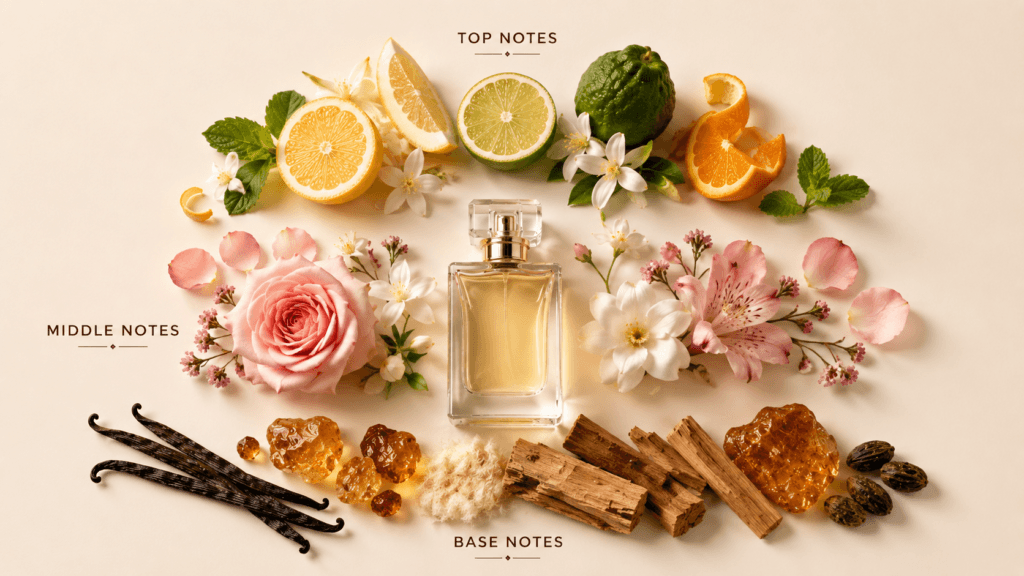
Table of Contents
What Are Fragrance Notes?
Fragrance notes are the different scent layers that make up a perfume. Instead of smelling the same from start to finish, perfumes evolve over time.
Most perfumes are built in a three-layer structure:
- Top Notes – The first scent you smell immediately after spraying
- Middle Notes (Heart Notes) – The core scent that develops after a few minutes
- Base Notes – The long-lasting scent that stays for hours
Together, these layers create a balanced fragrance journey.
Think of it like music:
- Top notes = first impression
- Middle notes = main melody
- Base notes = lasting memory
Top Notes: The First Impression
Top notes, also called head notes, are the scents you smell immediately after spraying a perfume.
These notes are designed to be fresh, light, and attention-grabbing. However, they evaporate quickly, usually within 5 to 20 minutes.
Common Top Notes in Perfumes
- Citrus: lemon, bergamot, orange, grapefruit
- Fruity notes: apple, berries, pear
- Fresh herbs: mint, basil
- Light florals like neroli
Top notes are important because they create the first impression of a perfume. If you’ve ever fallen in love with a perfume instantly in a store, chances are you were smelling its top notes.
Example: A fresh summer perfume like Dolce & Gabbana Light Blue opens with lemon, apple, and bergamot. Chanel No. 5 opens with aldehydes and bergamot.

Middle Notes (Heart Notes): The Main Character
Once the top notes fade, the middle notes begin to shine.
Also called heart notes, these form the core personality of a fragrance and typically last for 2 to 4 hours. Middle notes help connect the freshness of the opening with the deeper base notes.
Common Middle Notes
- Rose
- Jasmine
- Lavender
- Cinnamon
- Cardamom
- Green notes
- Fruity florals
This is the part of the perfume you’ll smell the most during the day.
Example: A floral perfume like Miss Dior may open fresh and citrusy but later reveal rose, peony, and lily-of-the-valley as the heart.
Base Notes: The Long-Lasting Foundation
Base notes are the deepest and richest part of a perfume, also known as the dry down.
These appear after the middle notes settle and can last several hours, sometimes even all day. Base notes add depth, warmth, and longevity to fragrances.
Common Base Notes
- Vanilla
- Musk
- Sandalwood
- Amber
- Patchouli
- Oud
- Tonka bean
- Benzoin
If someone compliments how good your perfume smells after several hours, they’re usually noticing the base notes.
Example: Winter perfumes like Tom Ford Black Orchid rely heavily on warm base notes like vanilla, patchouli, and sandalwood. YSL Black Opium finishes with coffee, vanilla, and cedarwood.
How Fragrance Notes Work Together
Perfumes are carefully blended so the notes transition smoothly.
For example:
- Opening (Top): Bergamot + lemon
- Heart (Middle): Jasmine + rose
- Dry Down (Base): Musk + sandalwood + vanilla
This changing scent journey is why perfumes smell different over time.
It’s also why you should never judge a perfume immediately after spraying. Give it at least 30 minutes to develop before deciding whether you like it.
Why Understanding Fragrance Notes Matters
Knowing fragrance notes can help you in a few key ways.
1. Choose Perfumes You’ll Actually Like
Love sweet scents? Look for vanilla, caramel, tonka bean, and praline in the notes.
Prefer fresh fragrances? Go for citrus, aquatic notes, and green accords.
Like warm, luxurious scents? Seek out oud, amber, and sandalwood.
2. Shop Smarter Online
When buying perfumes online, you can’t smell them first. Understanding notes helps you predict how a perfume may smell based on the ingredients listed.
3. Pick Perfumes for Different Seasons
Summer perfumes: Fresh citrus, aquatic, fruity, and floral notes
Winter perfumes: Warm vanilla, amber, oud, woody, and spicy notes
Most Popular Fragrance Families
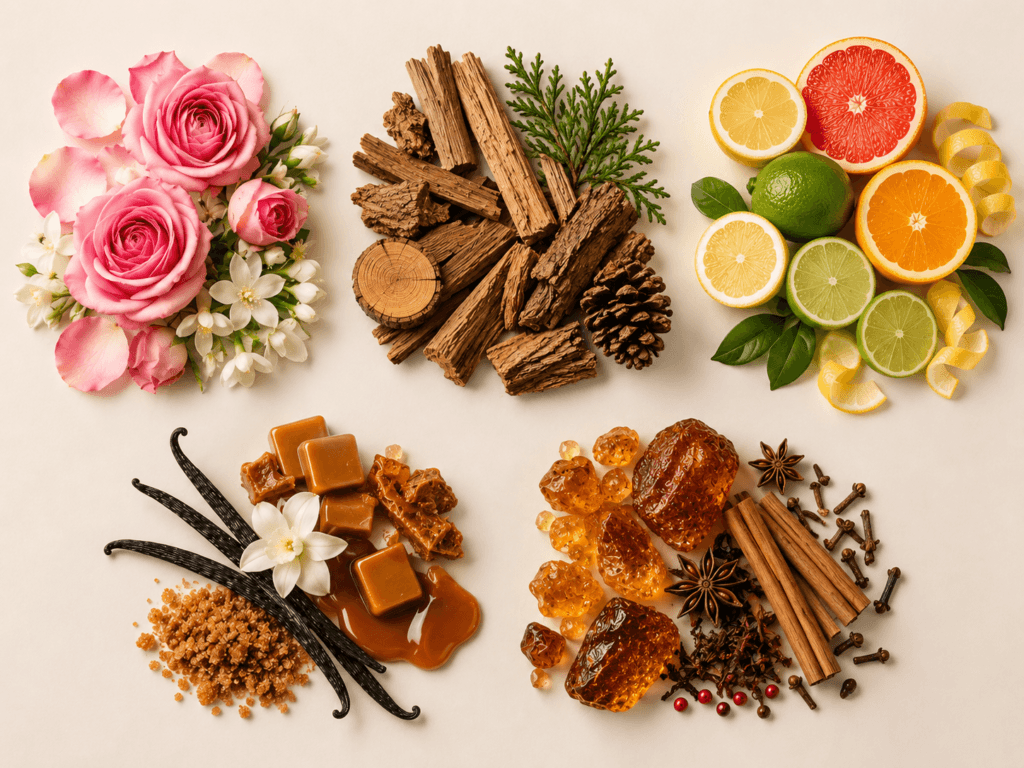
Now that you understand notes, here’s how they come together into broader fragrance families.
| Family | How It Smells | Example |
|---|---|---|
| Floral | Soft, feminine, romantic | Gucci Bloom |
| Woody | Warm, earthy, elegant | Bleu de Chanel |
| Fresh | Clean, citrusy, energetic | Acqua di Gio |
| Oriental / Amber | Rich, warm, sensual | Thierry Mugler Alien |
| Fruity | Sweet, playful, youthful | Viktor & Rolf Bonbon |
| Gourmand | Sweet, edible, dessert-like | Carolina Herrera Good Girl |
Now You Know What’s in Your Perfume
The next time someone asks why you love a particular perfume, you won’t just say “it smells good.” You’ll know it’s the way the bergamot opens so cleanly, or how the base settles into something warm and familiar. That’s really what fragrance notes give you , not just vocabulary, but a deeper appreciation for something you were already enjoying.
Once you understand fragrance notes, the next step is understanding perfume concentrations – check out our guide on EDT vs EDP.
FAQ Section
What are fragrance notes in perfume?
Fragrance notes are the different scent layers that make up a perfume. They are divided into top notes, middle notes (heart notes), and base notes, which appear at different stages as the fragrance develops on the skin.
What is the difference between top, middle, and base notes?
Top notes are the first scents you smell after spraying a perfume. Middle notes form the heart of the fragrance and become noticeable after the top notes fade. Base notes are the deepest and longest-lasting scents that remain after the perfume dries down.
How long do top, middle, and base notes last?
Top notes typically last 5–20 minutes, middle notes can last several hours, and base notes may remain on the skin for many hours depending on the fragrance and concentration.
Why do perfumes smell different after a few hours?
Perfumes change over time because different fragrance notes evaporate at different rates. As the lighter top notes disappear, the middle and base notes become more noticeable, creating an evolving scent experience.
Which fragrance notes last the longest?
Base notes generally last the longest because they contain heavier fragrance molecules that evaporate more slowly. Common long-lasting base notes include vanilla, amber, musk, sandalwood, and oud.
3 Responses