Table of Contents
If there’s one fragrance family that has stood the test of time, it’s florals. From ancient rose waters to modern skin-scent musks, floral perfumes have been at the heart of perfumery for centuries and they remain the single most popular fragrance category in the world today.
But “floral” is a vast, vast territory. A fresh-cut peony smells nothing like a heady tuberose. A light lily-of-the-valley is worlds away from a dark, animalic jasmine. If you’ve ever found yourself overwhelmed by options in the floral aisle, this guide is here to help.
What Are Floral Perfumes?
Floral perfumes are fragrances built around the scent of flowers — either a single bloom (called a soliflore) or a bouquet of several floral notes working together. They can be light and airy, rich and heady, powdery and romantic, green and fresh, or dark and sensual depending on which flowers are used and how they’re composed.
Florals are often described as the most “classic” fragrance family, but that does them a disservice. Modern floral perfumery is incredibly diverse — today’s floral fragrances can be minimalist and skin-like, bold and avant-garde, or anything in between.
The Most Common Floral Notes in Perfumery
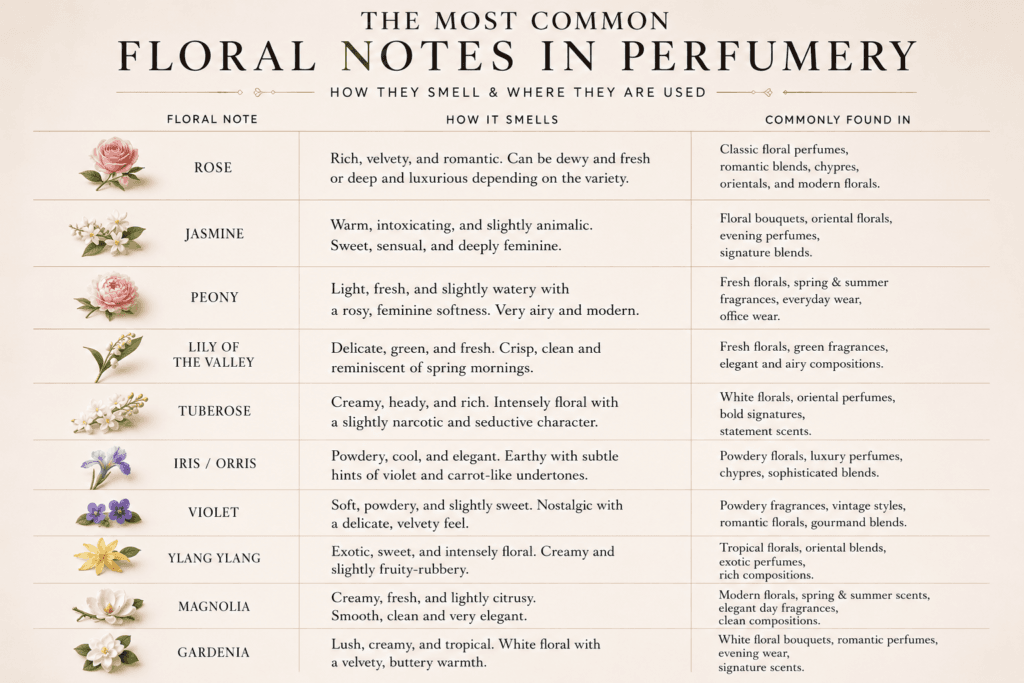
Different flowers bring very different personalities to a fragrance. Here’s what you need to know about the key players:
Rose
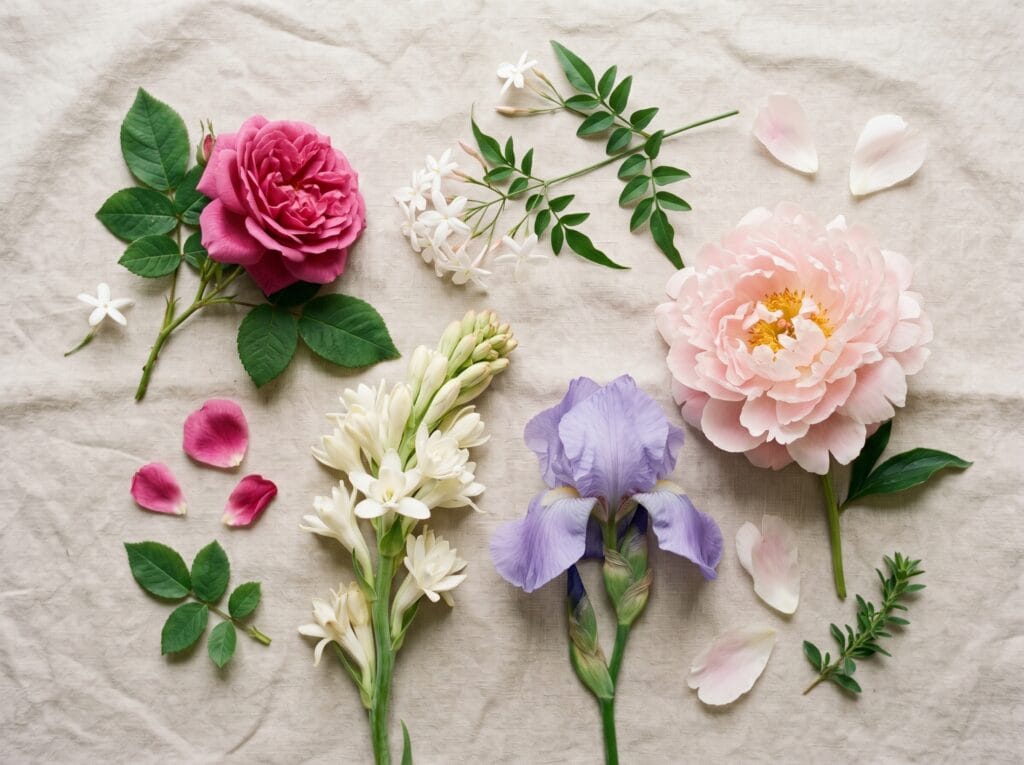
The undisputed queen of floral perfumery. Rose is rich, velvety, and complex — it can smell romantic and classic, or fresh and dewy depending on how it’s used. Turkish and Bulgarian rose are considered the finest in perfumery. Rose appears in more perfumes than any other single note.
Jasmine
Intoxicating, warm, and slightly animalic. Jasmine is the second most important floral note in perfumery and forms the backbone of countless classics. It has a rich, honeyed quality that can feel both sensual and luminous.
Peony
Light, fresh, and slightly watery. Peony is a modern favourite — it has a clean, romantic quality without the heaviness of rose or jasmine. Perfect for everyday and office wear.
Lily of the Valley (Muguet)
Delicate, green, and fresh. Lily of the valley smells like spring itself — crisp, light, and quietly elegant. It’s one of the most refined floral notes in perfumery.
Tuberose
Creamy, heady, and intensely floral. Tuberose is one of the most powerful flowers in perfumery — rich, slightly narcotic, and deeply feminine. It’s not subtle; it makes a statement.
Iris / Orris
Powdery, cool, and elegant. Iris (extracted from the root of the iris plant) has a distinctive carrot-meets-violet quality — sophisticated, slightly earthy, and very Parisian in character.
Violet
Soft, powdery, and slightly sweet. Violet is nostalgic and romantic — it has an almost candy-like quality that feels both vintage and modern depending on how it’s used.
Ylang Ylang
Exotic, sweet, and intensely floral. Ylang ylang has a rich, tropical character — heady and slightly rubbery when overdone, but beautifully lush when well-balanced.
Magnolia
Creamy, fresh, and lightly citrusy. Magnolia is softer and more modern than jasmine or rose — it has a clean, velvety quality that makes it very wearable.
Gardenia
Lush, creamy, and tropical. Gardenia smells white and velvety — similar to jasmine but softer and more buttery.
Types of Floral Perfumes
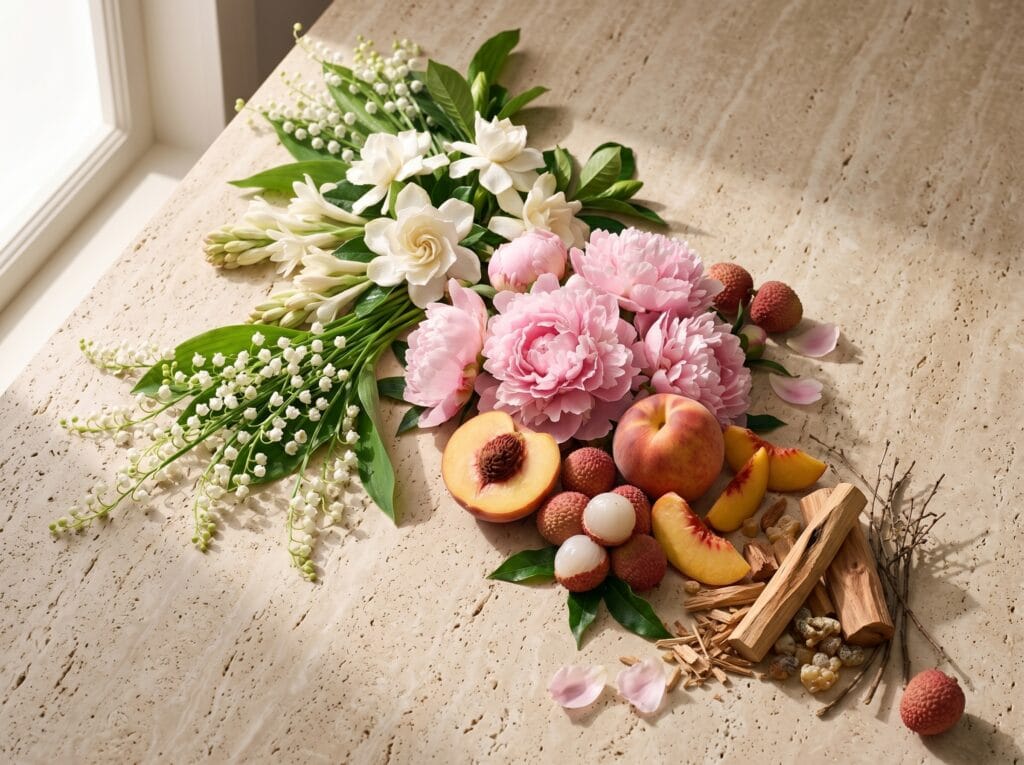
The floral family is broad enough to have its own sub-categories. Here’s how they break down:
1. Single Floral (Soliflore)
A perfume built around one dominant flower — a single rose, a single jasmine, a single peony. These are focused and intimate, designed to capture the essence of one bloom as faithfully as possible.
2. Floral Bouquet
The most classic type — a blend of several flowers working in harmony. Think of it as a carefully arranged bunch of mixed blooms. These are the most versatile and crowd-pleasing florals.
3. Fresh / Green Florals
Florals combined with green, watery, or ozonic notes to create something light and clean. These feel like a walk through a garden in the morning — bright, airy, and effortless.
4. Floral Oriental
When florals meet warm, resinous base notes like amber, vanilla, or sandalwood. The warmth of the oriental base makes the floral notes richer and more sensual. These are ideal for evenings and cooler weather.
5. Floral Woody
Florals anchored by woody notes like cedar, sandalwood, or vetiver. The wood adds sophistication and longevity, making these among the most elegant and versatile florals you can wear.
6. Powdery Florals
Soft, vintage-feeling florals with a powdery, skin-like quality — often featuring iris, violet, or musk. These feel intimate and nostalgic, like a well-dressed woman from another era.
7. Fruity Florals
A modern favourite — florals layered with juicy, bright fruit notes like peach, raspberry, lychee, or apple. These are playful, youthful, and very wearable for everyday use.
Some Iconic Floral Perfumes Worth Knowing
The floral family has produced some of the most celebrated fragrances in history. Here are a few worth knowing across different price points:
Chanel No. 5 — the most famous floral aldehyde in existence. A complex bouquet of rose, jasmine, and ylang ylang over a powdery, warm base. A true icon that defined an era of perfumery.
Gucci Bloom — a rich, heady white floral built around tuberose, jasmine, and Rangoon creeper. Intense, feminine, and deeply romantic. A modern classic.
Jo Malone Peony & Blush Suede — a soft, romantic pairing of peony with suede and red apple. Light, elegant, and incredibly wearable — one of the most universally loved florals of the last decade.
Lancôme La Vie Est Belle — a sweet, iris-led floral gourmand that bridges the gap between florals and sweet orientals. Warm, feminine, and hugely popular in India.
Yardley English Rose — an affordable, classic rose soliflore that has been a staple in Indian households for decades. Simple, fresh, and timeless.
Ajmal Aurum — a beautifully crafted Indian floral with warm, fruity-floral notes that suit our climate particularly well. One of the better luxury-feel florals at an accessible price point.
Are Floral Perfumes Suitable for Indian Weather?
Yes but with some nuance.
Light florals (peony, lily of the valley, magnolia, fresh green florals) are ideal for India’s warm weather. They’re airy enough to not feel heavy in the heat and project beautifully when your skin is warm.
Heavy white florals (tuberose, gardenia, ylang ylang) can become very intense in India’s heat and humidity. These are better suited for evenings, air-conditioned environments, or the cooler months between October and February.
Powdery florals can feel slightly suffocating in peak summer but come alive beautifully during winter evenings especially in North India.
Floral orientals — like a rose-amber or jasmine-vanilla blend, are best saved for cooler months or evening wear. The combination of heat and heavy base notes can make them overwhelming.
General rule for India: The lighter and fresher the floral, the more year-round wearable it is. The richer and headier, the more it belongs in cooler weather or evenings.
Floral vs Other Fragrance Families
Florals often overlap with other families, which is what makes them so versatile:
| Combination | What It Creates |
|---|---|
| Floral + Fresh / Green | Airy, clean, effortless |
| Floral + Woody | Sophisticated, polished, long-lasting |
| Floral + Oriental / Amber | Rich, sensual, evening-worthy |
| Floral + Fruity | Playful, youthful, everyday |
| Floral + Musk | Skin-like, intimate, modern |
| Floral + Gourmand | Sweet, romantic, cosy |
Understanding these combinations helps you figure out why a floral you tried didn’t work for you, it might have been the combination rather than the flower itself.
Who Are Floral Perfumes For?
Everyone. Seriously.
Despite being perceived as primarily feminine, florals are worn across genders and have been for centuries. Rose and jasmine appear in countless masculine and unisex fragrances. Iris is a cornerstone of many sophisticated men’s fragrances. The idea that florals are exclusively feminine is a marketing convention, not a fragrance rule.
Florals work particularly well for people who:
- Want something universally wearable and crowd-pleasing
- Are looking for a safe, reliable office or everyday fragrance
- Prefer something that feels classic and timeless rather than trendy
- Are newer to perfumery and want a starting point that’s easy to love
How Long Do Floral Perfumes Last?
Longevity varies widely within the floral family depending on the specific notes and concentration:
- Light, fresh florals (EDT): 3–5 hours
- Floral bouquets (EDP): 5–8 hours
- Floral orientals / Floral woodys (EDP/Parfum): 7–12 hours
The heavier the base notes, the longer the longevity. A fresh peony EDT will fade faster than a jasmine-amber EDP and that’s completely normal. For tips on stretching the wear time of lighter florals, read How to Make Perfume Last Longer.
FAQ Section
What is a floral perfume?
A floral perfume is a fragrance built around the scent of flowers such as rose, jasmine, peony, iris, tuberose, or lily of the valley.
Are floral perfumes only for women?
No. Many floral notes such as rose, iris, and jasmine are commonly used in men’s and unisex fragrances.
Which floral perfume is best for summer?
Fresh florals featuring peony, magnolia, lily of the valley, or green floral accords tend to work best in hot weather.
What is the difference between floral and fruity floral perfumes?
Floral perfumes focus primarily on flower notes, while fruity florals combine flowers with fruits such as peach, apple, raspberry, or lychee.
Do floral perfumes last long?
It depends on the concentration and composition. Light floral EDTs may last 3–5 hours, while floral orientals and floral woodies can last 8–12 hours.
Final Thoughts
Floral perfumes are the most versatile, most accessible, and most universally loved fragrance family in existence and for good reason. There’s a floral for every mood, every season, every occasion, and every personality.
If you’ve written off florals as “too basic” or “too feminine,” I’d gently encourage you to explore the range. A dark tuberose soliflore is nothing like a fresh peony EDT. A powdery iris is worlds apart from a fruity-floral. Once you understand the spectrum, you’ll realise there’s almost certainly a floral somewhere that was made for you.