You’ve found a perfume you love. Then you notice it comes in two versions – Eau de Toilette and Eau de Parfum, at two different price points. Do you go for the cheaper one and hope for the best? Or spend more without really knowing why?
This is one of the most common sources of confusion for perfume buyers, and honestly, it’s worth understanding before you spend your money.
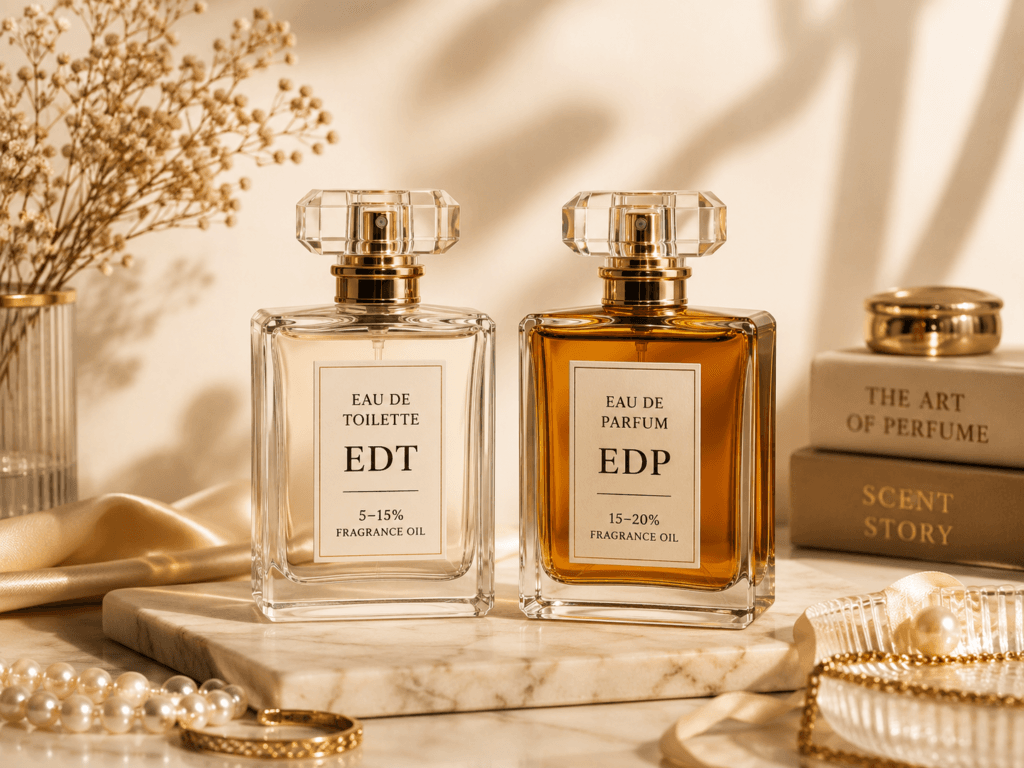
Table of Contents
EDT vs EDP: Quick Answer
EDT (Eau de Toilette) contains a lower concentration of fragrance oils and typically lasts around 3–4 hours. EDP (Eau de Parfum) contains a higher concentration of fragrance oils and usually lasts 5–8 hours or more.
In simple terms, EDTs are often lighter, fresher, and more suitable for daytime wear, while EDPs are richer, deeper, and designed to last longer on the skin.
What Do EDT and EDP Actually Mean?
Both terms refer to the concentration of fragrance oil in a perfume, in other words, how much of the actual scent is in the bottle versus alcohol and water.
The higher the concentration, the stronger and longer-lasting the fragrance tends to be and usually, the higher the price.
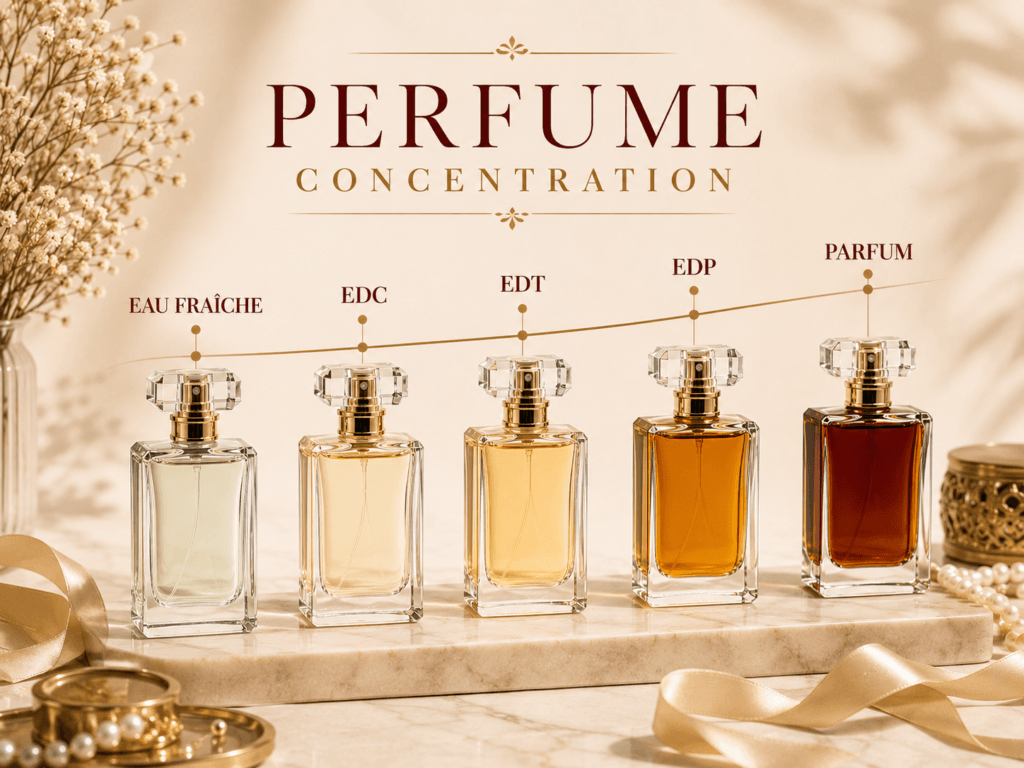
Here’s a quick breakdown of the most common perfume concentrations:
| Type | Fragrance Oil Concentration | Typical Longevity |
|---|---|---|
| Eau Fraîche | 1–3% | 1–2 hours |
| Eau de Cologne (EDC) | 2–4% | 2–3 hours |
| Eau de Toilette (EDT) | 5–15% | 3–4 hours |
| Eau de Parfum (EDP) | 15–20% | 5–8 hours |
| Parfum (Extrait) | 20–30%+ | 8+ hours |
While there are several fragrance concentrations available, EDT and EDP are by far the most common, so let’s focus on those.
EDT vs EDP: Side-by-Side Comparison
| Feature | EDT | EDP |
|---|---|---|
| Fragrance Oil Concentration | 5–15% | 15–20% |
| Longevity | 3–4 Hours | 5–8 Hours |
| Projection | Moderate | Stronger |
| Best For | Daytime & Office Wear | Evenings & Special Occasions |
| Feel | Fresh & Light | Rich & Deep |
| Price | Usually Lower | Usually Higher |
Eau de Toilette (EDT): Light, Fresh, and Everyday Friendly
EDT has a lower concentration of fragrance oil, which gives it a lighter and airier feel. It typically lasts around 3 to 4 hours on the skin.
That doesn’t make it a lesser product — it simply offers a different fragrance experience.
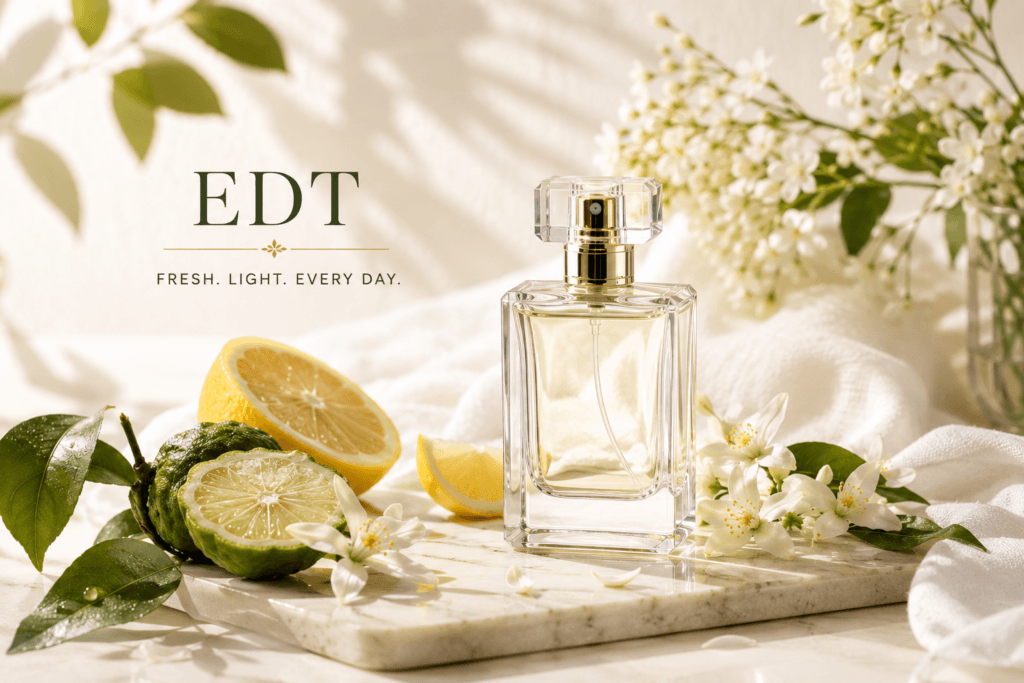
EDT tends to work best for:
- Daytime wear
- Office environments
- Warm weather and summer months
- Casual everyday use
- People who prefer subtle fragrances
Because EDTs are lighter, the top notes tend to be more noticeable. Fresh citrus, aquatic, green, and aromatic openings often feel brighter and more energetic in EDT form.
Popular EDT Examples
- Dior Sauvage EDT
- Chanel Chance EDT
- Versace Eros EDT
Eau de Parfum (EDP): Richer, Deeper, and Longer Lasting
EDP contains a higher concentration of fragrance oils, making it richer, more intense, and significantly longer lasting than an EDT.
Most EDPs last between 5 and 8 hours, although some can perform even longer depending on the fragrance and your skin chemistry.
Because of the higher concentration, the heart and base notes become more prominent. You often experience more depth, warmth, and complexity.
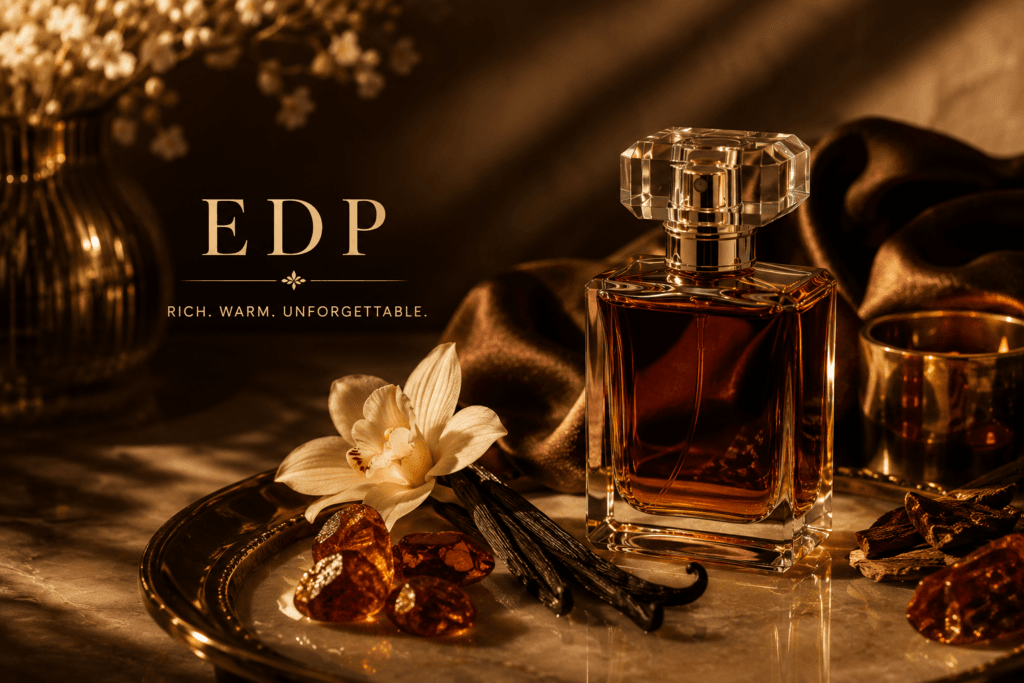
EDP tends to work best for:
- Evening wear
- Special occasions
- Cooler weather
- Long workdays
- People who prioritize longevity
EDPs are especially popular for fragrances featuring notes like vanilla, amber, oud, musk, patchouli, and woods.
Popular EDP Examples
- Lancôme Idôle EDP
- YSL Libre EDP
- Jo Malone Peony & Blush Suede EDP
Do EDT and EDP Versions of the Same Perfume Smell Exactly the Same?
Not necessarily.
Many people assume the EDP is simply a stronger version of the EDT, but that’s not always true.
While both versions share the same fragrance DNA, brands often adjust the composition slightly. An EDP may emphasize deeper notes, while an EDT may focus more on freshness and brightness.
For example, fragrance enthusiasts often describe Dior Sauvage EDP as warmer and smoother than the EDT, while others prefer the EDT because it feels fresher and more versatile.
If you’re considering a fragrance that comes in both versions, testing each one separately is always a good idea.
So Which One Should You Buy?
The answer depends on your lifestyle, budget, and fragrance preferences.
Choose EDT if:
- You want a light everyday fragrance
- You mainly wear perfume during the day
- You live in a hot climate
- You prefer fresh, citrusy, or aquatic scents
- You’re looking for a more affordable option
Choose EDP if:
- Longevity is important to you
- You don’t want to reapply frequently
- You enjoy richer fragrances
- You wear perfume for long days or evenings out
- You prefer floral, woody, gourmand, or oriental scents
A Few Things Worth Knowing Before You Buy
Your Skin Type Matters
Dry skin tends to absorb fragrance more quickly, which can make perfumes disappear faster. If you struggle with longevity, an EDP may perform better regardless of the season.
Higher Concentration Doesn’t Automatically Mean Better
A beautifully crafted EDT can outperform a poorly designed EDP. Fragrance quality, ingredients, and formulation matter just as much as concentration.
Storage Affects Performance
Even the best EDP can degrade if stored incorrectly. To maximize longevity, keep your perfumes away from direct sunlight, heat, and humidity.
Frequently Asked Questions
Does EDP always last longer than EDT?
Generally yes, because EDP contains a higher concentration of fragrance oils. However, the actual performance also depends on the fragrance formula, your skin chemistry, and environmental conditions.
Is EDP stronger than EDT?
In most cases, yes. EDPs usually have stronger projection and longer-lasting performance than EDTs.
Which is better for summer: EDT or EDP?
Many people prefer EDTs during hot weather because they feel lighter and less overwhelming. However, lighter EDPs can also work well in summer.
Is EDP worth the extra money?
If longevity is important to you, an EDP is often worth the higher price. If you prefer lighter fragrances and don’t mind reapplying, an EDT may offer better value.
Which concentration should beginners buy?
There’s no universal answer. If you enjoy fresh, easy-to-wear scents, start with an EDT. If you want stronger performance and longer wear time, an EDP may be a better choice.
The Bottom Line
EDT and EDP aren’t competing products, they’re simply different interpretations of a fragrance.
An EDT offers a lighter, fresher experience that’s perfect for everyday wear, while an EDP provides greater depth, intensity, and longevity.
When deciding between Eau de Toilette and Eau de Parfum, think about how you plan to wear the fragrance, the climate you live in, and the performance you expect.
And if you’re still learning the language of perfumery, be sure to check out our guide to fragrance notes and how perfumes are structured. Understanding fragrance notes can make choosing your next perfume much easier.
2 Responses