Learn the art of perfume layering to create a unique scent and improve the longevity of your favorite fragrances.
Table of Contents
Have You Ever Wondered Why Your Perfume Fades So Quickly?
You spray your favorite perfume before leaving home, but by lunchtime, it’s barely noticeable. While fragrance quality plays a role, the way you apply and layer your scent has an even bigger impact.
Perfume layering is one of the easiest ways to make your fragrance last longer without constantly reapplying it. It’s also a fun way to create a signature scent that’s uniquely yours.
In this guide, we’ll explain what perfume layering is, why it works, and how you can start layering fragrances like a pro.
What Is Perfume Layering?
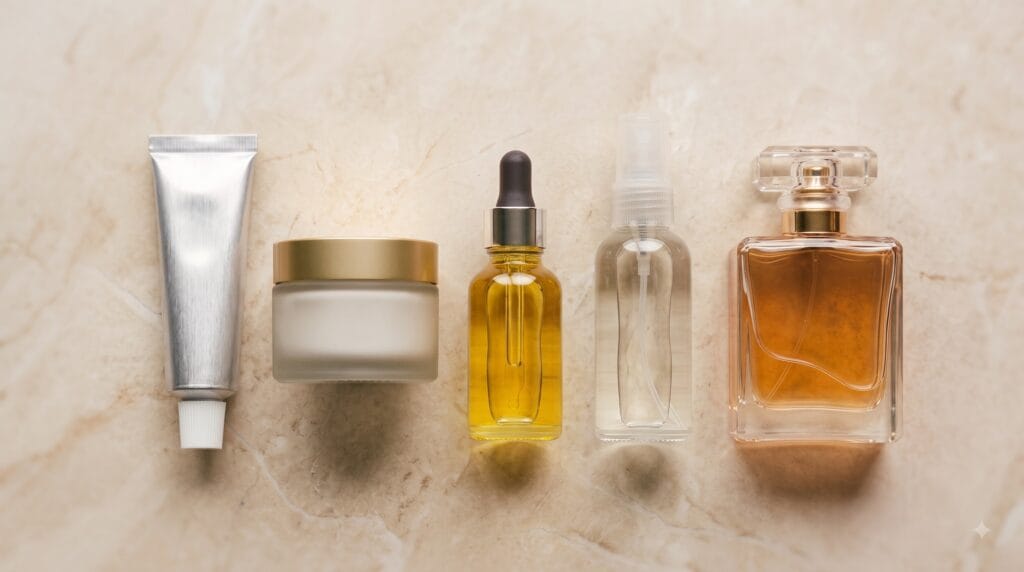
Perfume layering is the process of combining scented products or multiple fragrances to create a richer, longer-lasting scent.
Instead of relying on a single perfume spray, layering builds fragrance in stages using products such as:
- Body wash
- Body lotion
- Body oil
- Body mist
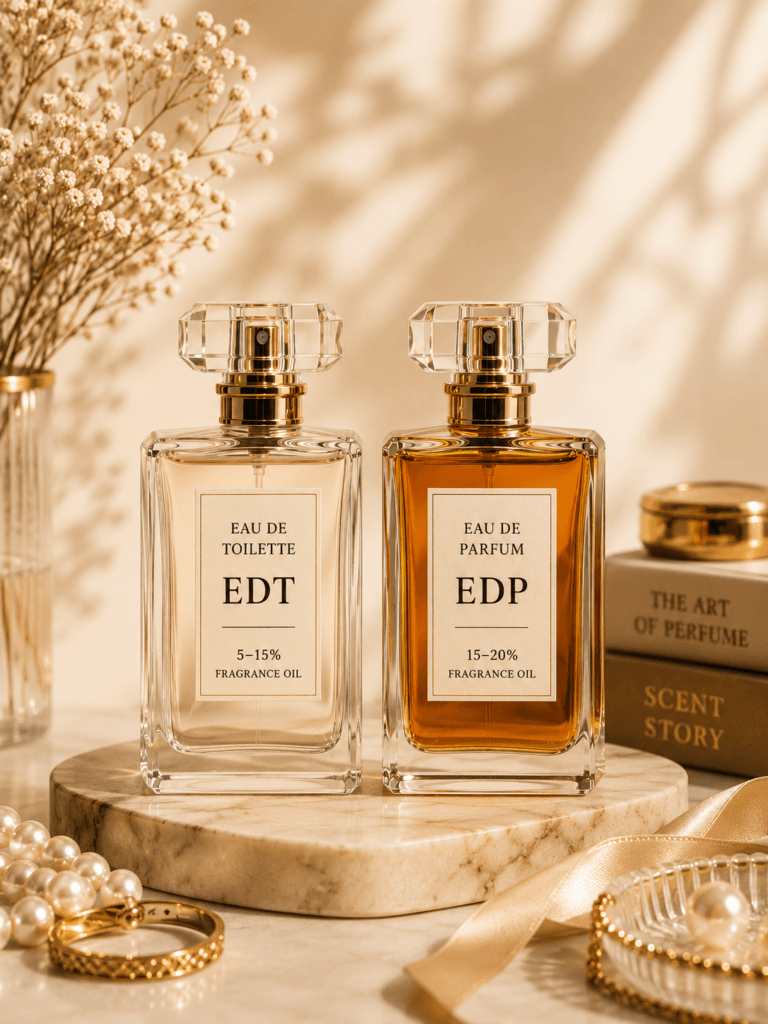
- Eau de Toilette (EDT)
- Eau de Parfum (EDP)
- Perfume oils
Each layer reinforces the scent, helping it stay on your skin for longer.
Why Does Perfume Layering Work?
Think of layering like painting a wall.
A single coat may look fine initially but fades over time. Multiple thin coats create better depth, durability, and longevity.
The same principle applies to fragrances.
Each scented layer slows down evaporation and gives the perfume more surfaces to cling to, especially when your skin is properly moisturized.
Benefits include:
- Longer-lasting fragrance
- Better scent projection
- More complex fragrance profile
- Reduced need for frequent reapplication
- A personalized signature scent
Start With Moisturized Skin
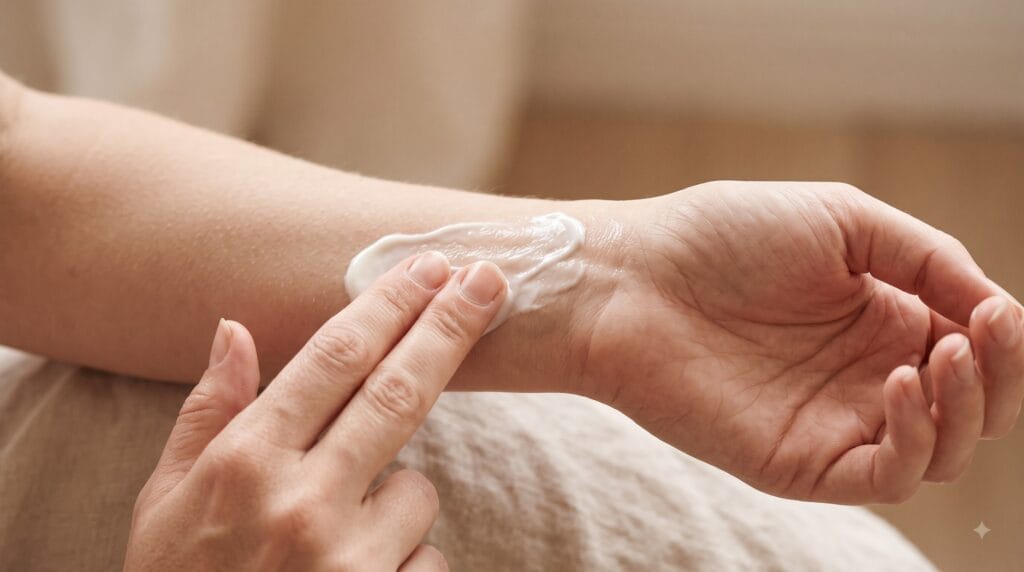
One of the biggest reasons perfume disappears quickly is dry skin.
Dry skin absorbs fragrance faster and allows the aromatic molecules to evaporate more quickly.
Before applying perfume:
- Use an unscented moisturizer.
- Alternatively, use a lotion that matches your fragrance family.
- Apply immediately after showering while your skin is still slightly damp.
Hydrated skin helps lock in fragrance for several extra hours.
Layer Products in the Right Order
For the best performance, follow this sequence:
- Body wash
- Body lotion or body cream
- Body oil (optional)
- Body mist
- Perfume
Applying products from the lightest to the strongest creates a balanced scent that lasts throughout the day.
Match Fragrance Families

Layering works best when the scents complement each other.
Floral + Floral
Perfect for romantic, elegant fragrances.
Examples:
- Rose + Jasmine
- Peony + Lily
- Lavender + Iris
Vanilla + Gourmand
Ideal if you enjoy warm, sweet fragrances.
Examples:
- Vanilla + Caramel
- Vanilla + Coffee
- Vanilla + Chocolate
Citrus + Fresh
Great for everyday office wear.
Examples:
- Bergamot + Lemon
- Orange + Green Tea
- Grapefruit + Neroli
Woody + Amber
Excellent for evenings and colder weather.
Examples:
- Sandalwood + Vanilla
- Cedarwood + Amber
- Oud + Musk
Experiment With Complementary Notes
You don’t always have to use products from the same brand.
Some note combinations naturally blend well:
- Rose + Vanilla
- Jasmine + Musk
- Lavender + Tonka Bean
- Coconut + Vanilla
- Pear + White Musk
- Orange Blossom + Amber
- Fig + Sandalwood
Start with one spray of each fragrance and adjust until you find a combination you love.
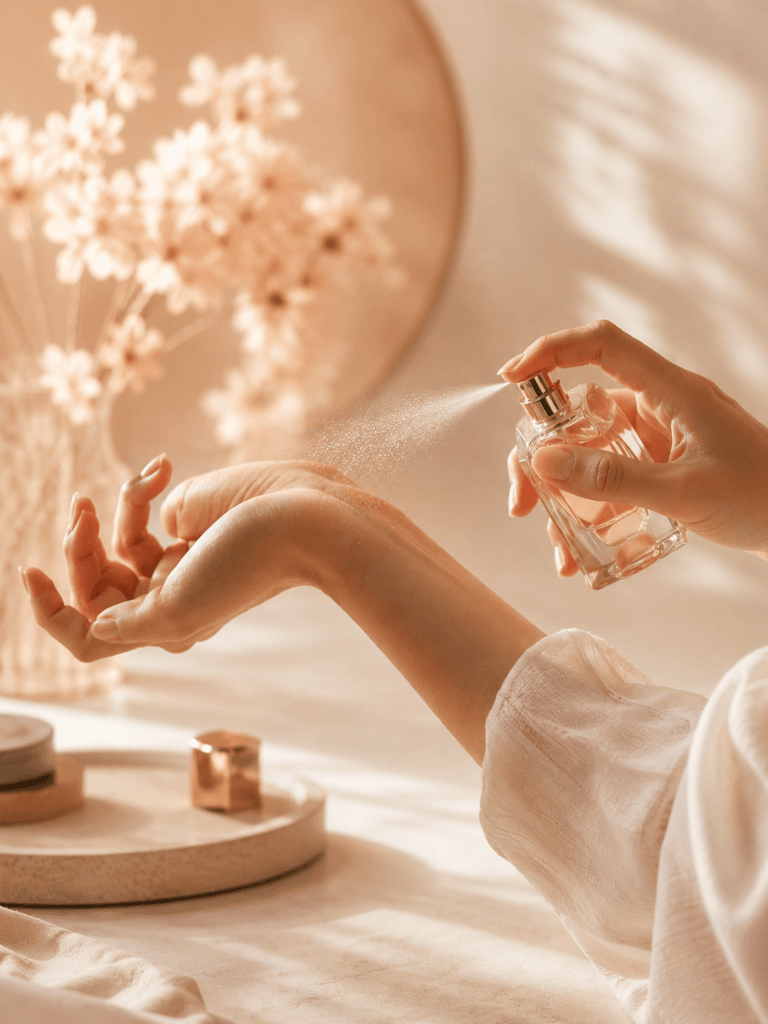
Apply Perfume to Pulse Points
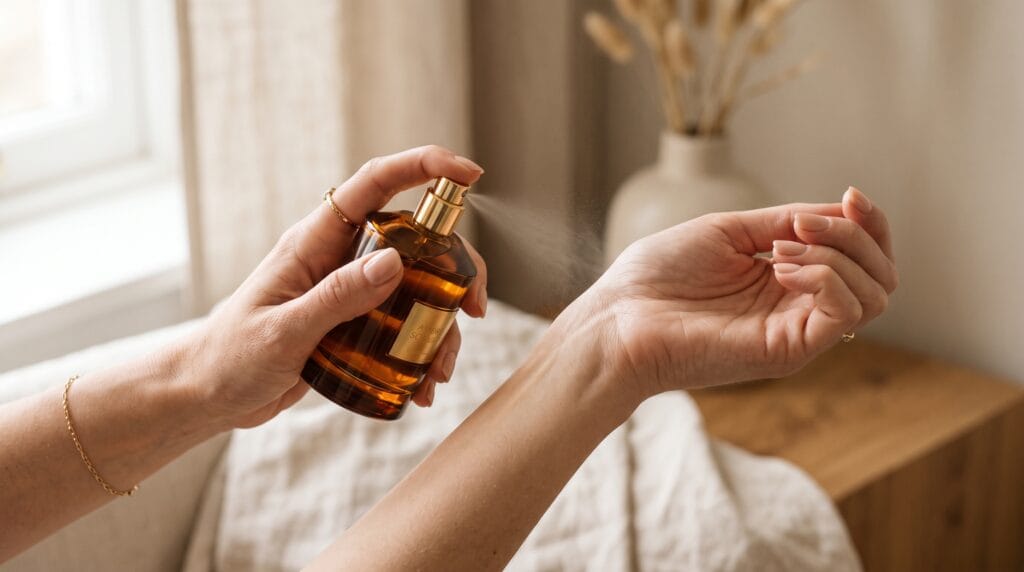
Pulse points generate more heat, helping fragrance diffuse naturally.
Focus on:
- Wrists
- Neck
- Behind the ears
- Inner elbows
- Behind the knees
Avoid rubbing your wrists together after spraying, as this can disrupt the fragrance’s opening notes.
Don’t Forget Your Clothes (With Care)
Fabric usually holds fragrance longer than skin.
Lightly spray perfume on:
- Jackets
- Scarves
- Sweaters
However, avoid spraying directly onto delicate fabrics like silk or satin, as some perfumes may leave stains.
Always test on a hidden area first.
Use Hair Mist Instead of Perfume
Hair can retain scent for hours, but traditional perfumes often contain alcohol that may dry it out.
If possible:
- Use a dedicated hair perfume.
- Or spray your perfume onto a hairbrush before brushing through your hair.
This creates a subtle scent trail without overexposing your hair to alcohol.
Reapply Strategically
Rather than spraying five or six times in the morning, carry a travel-sized atomizer for a light refresh later in the day.
A quick spray after six to eight hours often works better than overspraying at the start.
Common Perfume Layering Mistakes
Mixing Too Many Strong Fragrances
Combining several bold perfumes can create an overwhelming scent.
Stick to two fragrances when you’re starting.
Ignoring Fragrance Families
Fresh citrus rarely pairs well with heavy smoky oud unless carefully balanced.
Choose scents with complementary notes.
Overspraying
More perfume doesn’t always mean better performance.
Proper layering is far more effective than using excessive sprays.
Applying to Dry Skin
Always moisturize first if longevity is your goal.
Easy Layering Ideas for Beginners
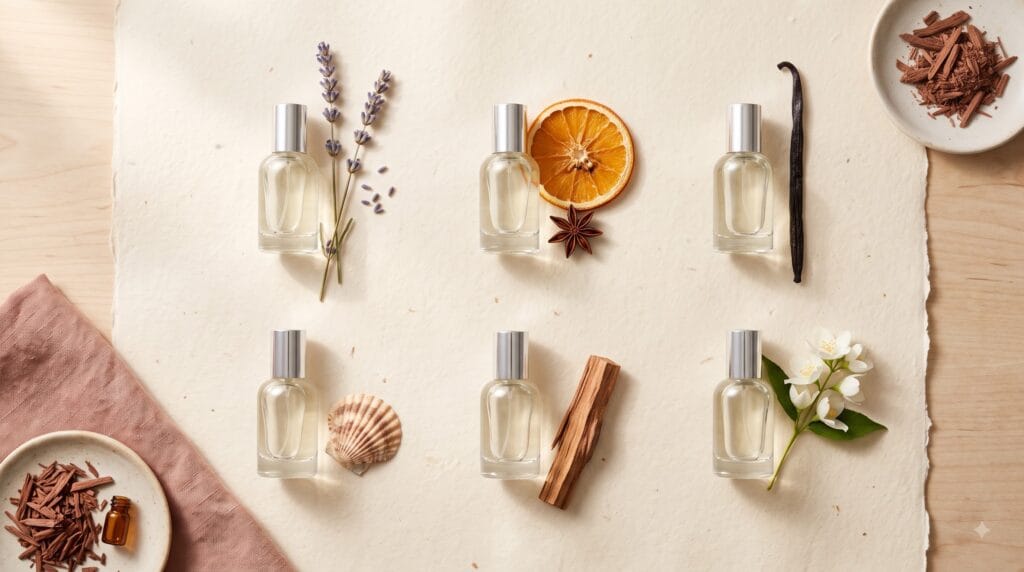
| Desired Vibe | Try This Combination |
|---|---|
| Fresh Office Wear | Bergamot + Green Tea |
| Romantic Date | Rose + Vanilla |
| Cozy Winter | Amber + Sandalwood |
| Beach Vacation | Coconut + White Musk |
| Elegant Evening | Oud + Rose |
| Everyday Signature | Musk + Jasmine |
Does Perfume Layering Really Make Fragrance Last Longer?
Yes—when done correctly.
Layering doesn’t change the quality of a perfume, but it helps reduce evaporation and creates a stronger fragrance foundation.
Combined with moisturized skin and proper application, many people notice their fragrance lasting significantly longer than when using perfume alone.
Final Thoughts
Perfume layering is one of the simplest ways to improve both the longevity and uniqueness of your fragrance.
You don’t need an expensive perfume collection to get started. Begin with complementary scent families, moisturize your skin, apply your fragrance strategically, and experiment until you discover combinations that suit your personality and lifestyle.
The best signature scent is often the one you create yourself.
Frequently Asked Questions
Can I layer perfumes from different brands?
Absolutely. As long as the notes complement each other, fragrances from different brands can blend beautifully.
Is perfume layering only for expensive perfumes?
No. Affordable perfumes often benefit the most from layering, helping them smell richer and last longer.
Which fragrance family is easiest to layer?
Vanilla, musk, rose, sandalwood, and citrus fragrances are generally the most versatile and beginner-friendly.
How many perfumes should I layer?
Two is usually enough. Once you’re comfortable, you can experiment with additional scented products like body lotions or perfume oils.
Should I spray both perfumes equally?
Not necessarily. If one fragrance is stronger, use fewer sprays of it so it doesn’t overpower the other.