Table of Contents
If you’ve ever walked into a perfume shop and found yourself drawn to a rich, smoky fragrance that lingers long after you’ve left, chances are you’ve encountered oud.
Revered for centuries in the Middle East and South Asia, oud is one of the world’s most prized fragrance ingredients. From affordable everyday perfumes to luxury niche creations costing tens of thousands of rupees, oud has become one of the biggest trends in modern perfumery.
But what exactly is oud? Why is it so expensive? And why does it smell so different from almost every other fragrance ingredient?
This beginner’s guide answers everything you need to know before buying your first oud perfume.
What Is Oud, Exactly?
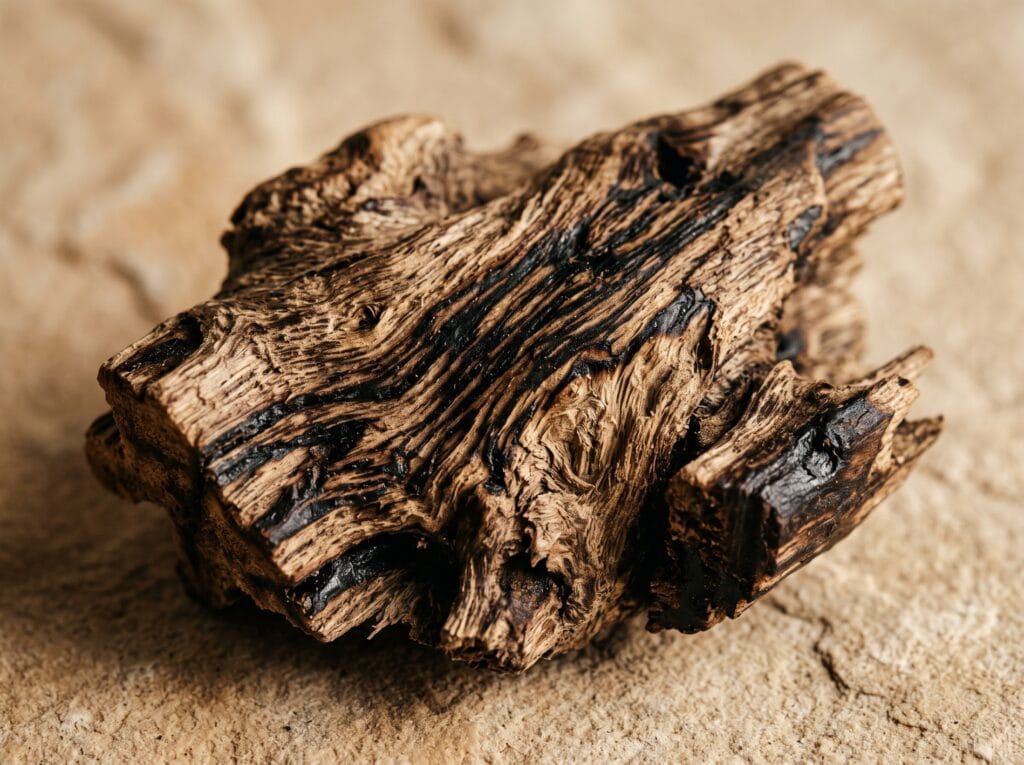
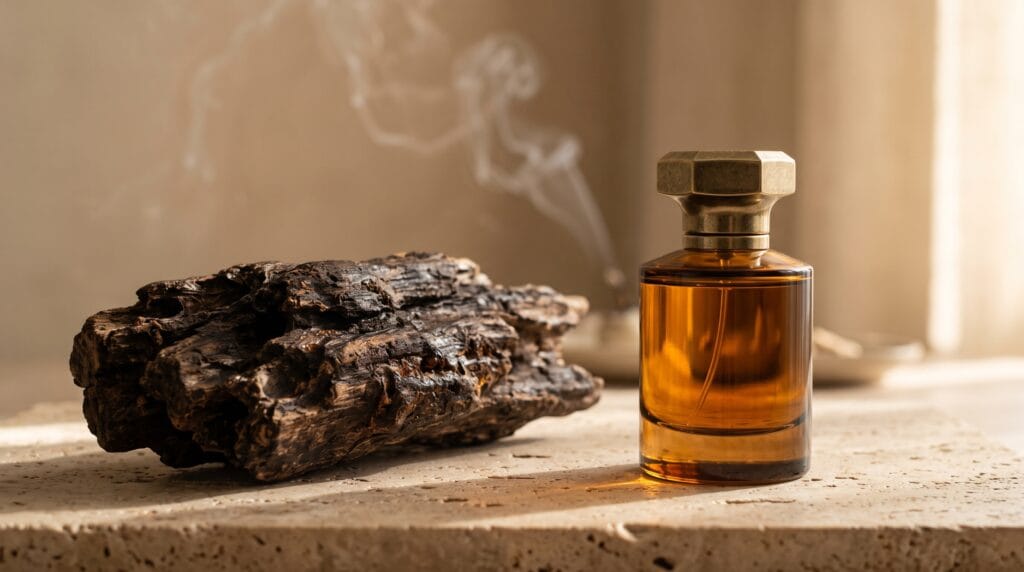
Oud (also known as agarwood or oudh) is a fragrant resinous wood that forms inside Aquilaria trees after they’re infected by a naturally occurring fungus.
As a defence mechanism, the tree produces a dark, aromatic resin around the infected area. Over many years, this resin gradually saturates the heartwood, transforming it into the richly scented material we know as oud.
The catch? Only a small percentage of Aquilaria trees naturally develop this resin, making genuine oud incredibly rare.
High-quality natural oud is among the world’s most expensive fragrance materials, with exceptional grades commanding astonishing prices due to their rarity, age, and craftsmanship.
Where Does Oud Come From?

The origin of oud plays a huge role in how it smells. Different regions produce noticeably different scent profiles.
Indian Oud (Assam)
Indian oud is often considered the most traditional style. It tends to be deep, earthy, leathery, smoky, and slightly animalic. This bold profile is highly prized by experienced oud enthusiasts.
Arabic Oud
Most modern Middle Eastern fragrances use a sweeter interpretation of oud. These blends are smoother, warmer, woodier, and much easier for beginners to appreciate.
Thai & Cambodian Oud
Oud from Thailand and Cambodia is generally lighter, softer, and fruitier. These varieties are commonly used in contemporary perfumes designed for everyday wear.
Natural vs. Synthetic Oud
Here’s something many fragrance guides don’t mention: most oud perfumes priced under ₹3,000 don’t contain natural oud oil.
Instead, perfumers recreate the woody, smoky character of oud using carefully blended aroma molecules. These synthetic accords make oud-inspired fragrances far more affordable while still capturing much of the depth and richness people associate with the note.
This isn’t a compromise—many beautifully crafted designer and niche fragrances rely on synthetic oud because it offers greater consistency, versatility, and wearability.
Natural oud oils and traditional attars are still available, but they’re significantly more expensive, alcohol-free, and applied differently from spray perfumes.
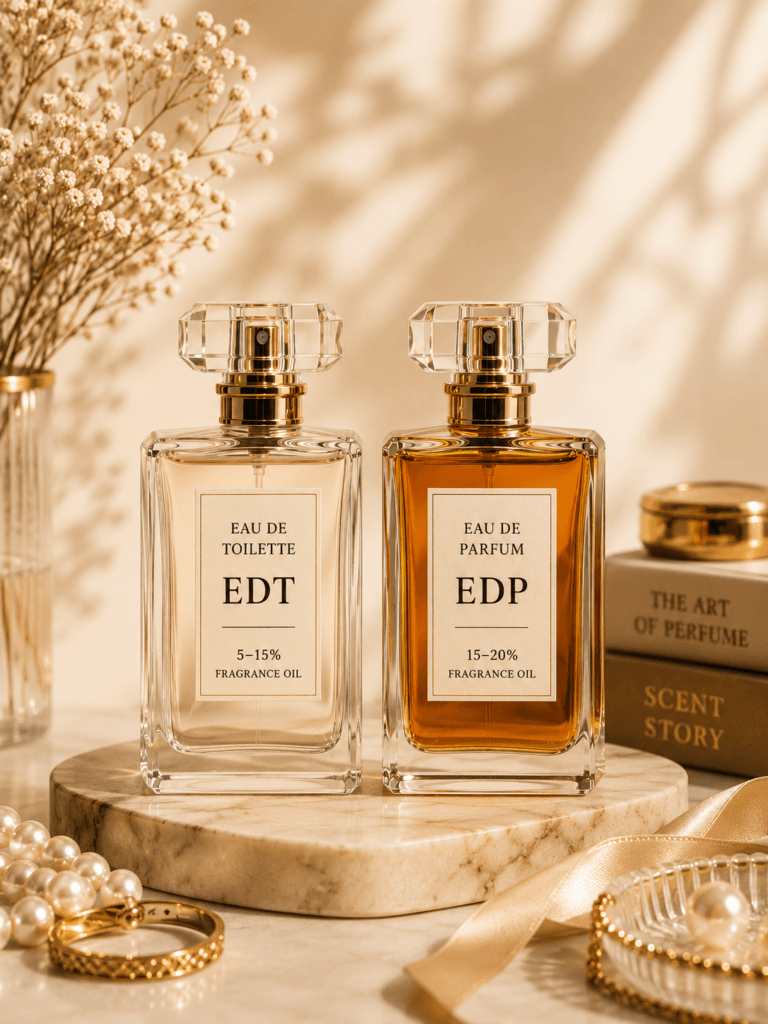
For most people, an eau de parfum featuring a well-crafted oud accord is the perfect place to start.
What Does Oud Smell Like?
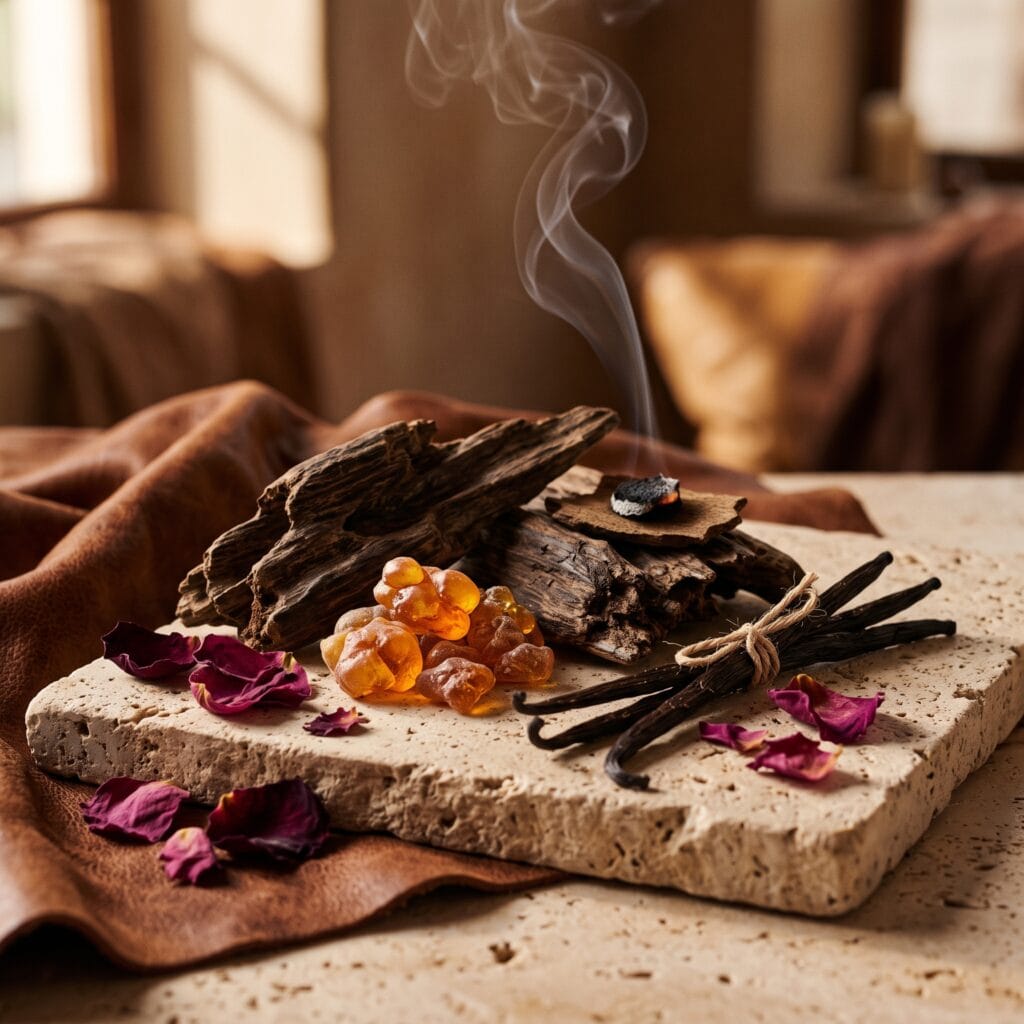
Oud is one of the hardest fragrance notes to describe because it can smell dramatically different depending on its origin and how it’s blended.
Some of the most common characteristics include:
- Rich woody notes, similar to aged timber
- Smoky, reminiscent of burning incense rather than cigarette smoke
- Earthy and resinous
- Leathery
- Slightly animalic, creating warmth and depth
- Sweet when paired with notes like vanilla, amber, or rose
- Occasionally medicinal or herbal, particularly in traditional Indian oud
No two oud oils smell exactly alike. The species of tree, country of origin, age of the resin, extraction method, and even your skin chemistry all influence how the fragrance develops.
That’s why the same oud perfume can smell surprisingly different on two different people.
Popular Oud Fragrance Pairings
Modern perfumery rarely uses oud on its own. Instead, it’s blended with complementary ingredients to create different moods and styles.
Oud + Rose
The classic Middle Eastern combination. Rich, romantic, elegant, and instantly recognisable. Perfect for weddings, celebrations, and evening wear.
Oud + Vanilla
One of the easiest ways to experience oud. Vanilla softens its darker edges, creating a warm, sweet, and beginner-friendly fragrance.
Oud + Musk
A cleaner, softer interpretation that’s ideal for everyday wear. Musk smooths the composition without taking away oud’s distinctive character.
Oud + Amber
Warm, resinous, luxurious, and exceptionally long-lasting. These fragrances perform beautifully during cooler weather and festive occasions.
Who Should Try Oud Perfumes?
Oud isn’t for everyone but if you enjoy rich, characterful fragrances, it’s worth exploring.
You’ll probably enjoy oud if you:
- Prefer bold, long-lasting perfumes
- Love woody, smoky, amber, or oriental fragrances
- Want something distinctive for evenings or special occasions
- Are interested in exploring Middle Eastern perfumery
If you usually wear fresh citrus, aquatic, or light floral fragrances, start with softer oud blends before moving on to more traditional styles.
How to Wear Oud Without Overdoing It
Oud is one of the most powerful fragrance notes in perfumery, so restraint is key.
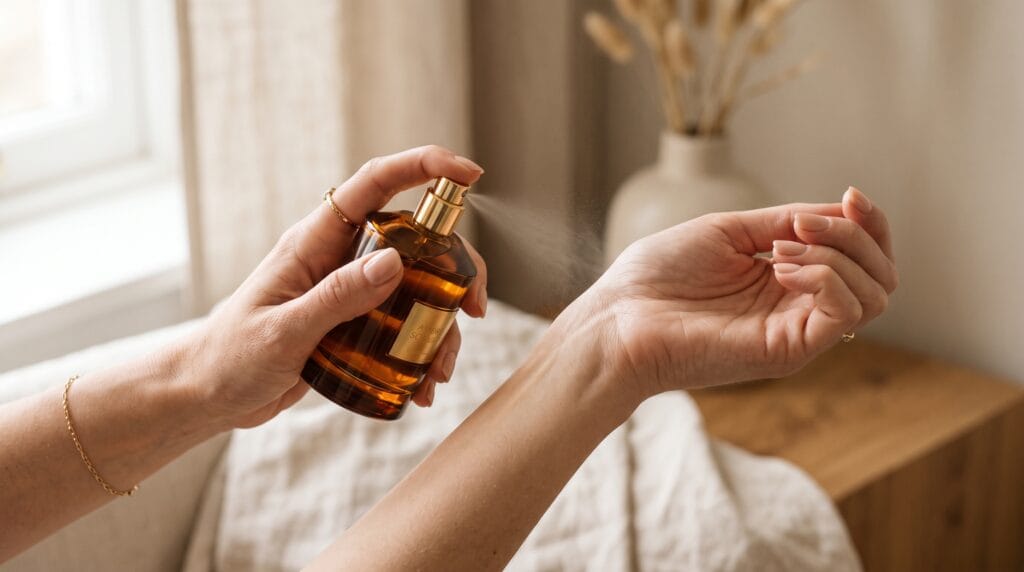
- Stick to one or two sprays of an eau de parfum.
- Apply to pulse points such as your wrists, chest, or behind the ears.
- Avoid spraying directly onto delicate clothing, as darker oud oils can sometimes leave marks.
- During Indian summers, choose lighter blends featuring citrus, fresh spices, or aquatic notes.
- Reserve richer oud fragrances for evenings, winter, weddings, and festive occasions.
Where Should Beginners Start?
If you’re new to oud, don’t begin with a pure oud attar. Traditional oud oils can be intensely smoky and overwhelming for first-time wearers.
Instead, choose an accessible eau de parfum where oud supports other notes like vanilla, rose, amber, or musk. These blends are smoother, easier to wear, and provide an excellent introduction before exploring more traditional oud fragrances.
As your nose becomes familiar with the note, you can gradually discover richer, more authentic oud compositions.
→ See our guide: Best Oud Perfumes for Beginners in India
Frequently Asked Questions
Is oud suitable for everyday wear?
Yes. Modern oud fragrances blended with vanilla, musk, citrus, or amber can be worn daily. Traditional pure oud is generally better suited to evenings and special occasions.
Why is oud perfume so expensive?
Natural oud is incredibly rare because only a small percentage of Aquilaria trees produce the resin needed to create it. Harvesting and processing the resin also takes years, making genuine oud one of the most valuable ingredients in perfumery.
Is synthetic oud good?
Absolutely. Many excellent designer and niche fragrances use synthetic oud accords because they’re more affordable, consistent, and often easier to wear than natural oud.
Does oud last longer than other perfumes?
In many cases, yes. Oud is a rich base note that typically provides excellent longevity, especially when combined with amber, musk, or woody notes.
What’s the difference between oud and sandalwood?
Although both are woody fragrance notes, sandalwood is creamy, smooth, and soft, while oud is darker, smokier, richer, and considerably more intense.
Can women wear oud perfumes?
Definitely. Oud is completely gender-neutral and appears in many women’s, men’s, and unisex fragrances. The overall scent depends more on the accompanying notes than on the oud itself.