Someone walks past you in the office and says, “You smell amazing.” But you sprayed your perfume three hours ago and can’t smell a thing. So is it still working or not?
The answer comes down to two words every perfume lover in India should know: sillage and projection. They sound similar, and most people use them interchangeably. They’re not the same thing, and understanding the difference will change how you buy, spray and judge your perfumes.
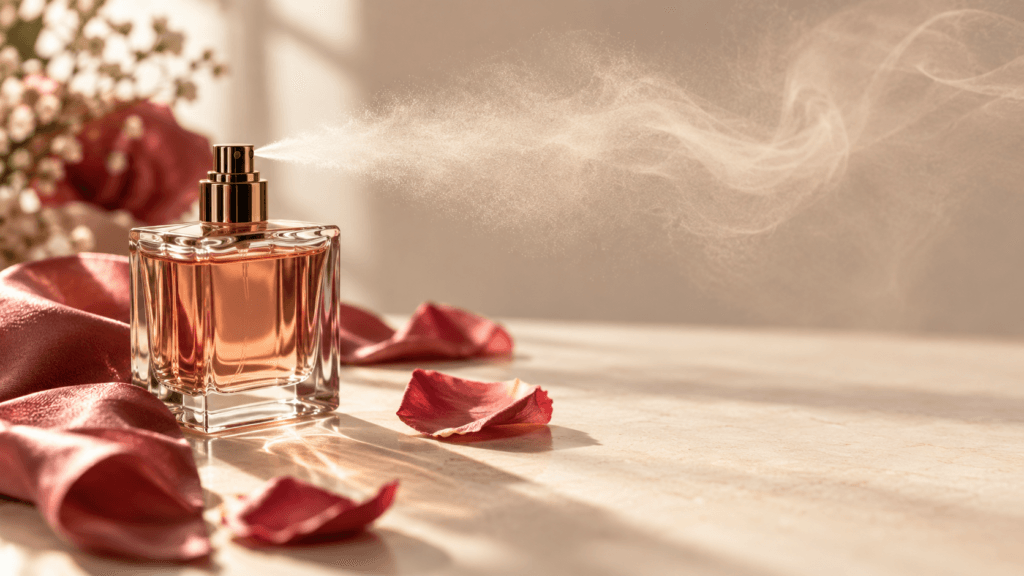
Table of Contents
What Is Sillage in Perfume?
Sillage is the scent trail your perfume leaves behind you as you move. It’s what people notice after you’ve walked out of a room, passed them in a corridor or left the lift.
The word comes from French, where it means the wake a boat leaves on the water. That’s the perfect picture: you move forward, and your fragrance lingers in the air behind you.
A perfume with strong sillage gets noticed. It’s the reason someone can tell you’ve been in a room before they see you. A perfume with soft sillage stays mostly with you and disappears quickly once you’ve moved on.
What Is Projection in Perfume?
Projection is how far your perfume radiates from your body while you’re standing still. Think of it as the invisible scent bubble around you.
If someone sitting at arm’s length can smell your perfume, it has good projection. If they need to lean in close, near your neck or wrist, it has low projection. Perfumes with very low projection are often called “skin scents.”
Projection is usually strongest in the first hour after you spray. As the top notes evaporate, the bubble around you gets smaller, even though the perfume is still on your skin.
Sillage vs Projection: The Difference at a Glance
| Sillage | Projection | |
|---|---|---|
| What it means | The scent trail you leave behind | The scent bubble around you |
| When people notice it | After you’ve walked past | While you’re near them |
| You’re usually | Moving | Standing or sitting still |
| Simple test | Can someone smell it after you leave the room? | Can someone at arm’s length smell it? |
| Matters most for | Making an entrance, evenings, events | Office, meetings, close conversations |
A perfume can be strong in one and weak in the other. Some fragrances sit close to the skin but leave a noticeable trail as you move. Others create a big bubble in the first hour but leave little behind as you walk away.
The Myth: “If I Can’t Smell It, It’s Gone”
This is the most common perfume mistake, and it’s why so many people over-spray.
Your nose gets used to smells it’s exposed to constantly. This is called olfactory fatigue, or nose blindness. Within a short time of spraying, your brain starts filtering out your own perfume so it can notice new smells around you.
So while you think your perfume has disappeared, the people around you may still be smelling its projection and sillage clearly. That’s exactly why a colleague compliments a scent you stopped noticing hours ago.
The fix? Don’t judge your perfume by your own nose. Ask someone you trust, or smell your wrist after stepping outside for a few minutes. And don’t reach for more sprays. As I explain in The Layering Lie, more sprays rarely means more hours.
What Affects Sillage and Projection?
- Concentration. Extrait and EDP generally project more and leave a stronger trail than EDT or body mist, because they contain more perfume oil. If you’re unsure of the difference, you can refer to the blog EDP v/s EDT.
- The notes. Heavier base notes like oud, amber, vanilla and musk last and trail longer. Light citrus and fresh notes project brightly at first, then fade fast. Learn how this works in Fragrance Notes Explained.
- Skin and weather. Warm skin pushes fragrance out faster, so perfumes often project more in Indian heat but burn through quicker. Dry skin holds scent poorly. Your skin chemistry plays a part too, which I cover in The Skin Chemistry Secret.
- Where you spray. Pulse points like the neck and inner wrists give off warmth, which helps projection. Spraying clothes or a scarf helps sillage, because fabric holds scent and moves with you.
How Much Sillage Is Too Much?
Strong sillage is great at a wedding. It’s less great in a lift, a packed metro or a closed office cabin. Match your sprays to where you’re going:
| Occasion | Sprays (EDP) | Aim for |
|---|---|---|
| Office or meetings | 1–2 | Soft projection, light sillage |
| Casual day out | 2–3 | Moderate projection |
| Date night | 2–3 | Close projection, noticeable when near |
| Weddings and festive events | 3–4 | Strong sillage |
A good rule: people should notice your perfume when they’re near you, not from across the room. For more ways to make each spray count, read How to Make Perfume Last Longer.

Frequently Asked Questions
Is strong sillage a good thing?
It depends on the setting. Strong sillage works for evenings, events and open spaces. In offices, hospitals and crowded transport, softer sillage is more considerate.
Do budget perfumes have good sillage?
Many do. Several affordable Middle Eastern brands available in India are known for strong projection and sillage. Price doesn’t decide performance; concentration and the choice of notes matter far more.
Which perfume notes have the most sillage?
Oud, amber, musk, vanilla and many woody notes tend to leave the strongest trail. Citrus, green and light aquatic notes project brightly at first but fade faster.
What is the difference between sillage and longevity?
Sillage is how far your scent trails behind you. Longevity is how many hours the perfume lasts on your skin. A perfume can last all day as a quiet skin scent, with very little sillage.